Mob : +91 92554 42103
Email id: iahrw2019@gmail.com
Mob : +91 92554 42103
Mob : +91 92554 42103
Email id: iahrw2019@gmail.com
Mob : +91 92554 42103

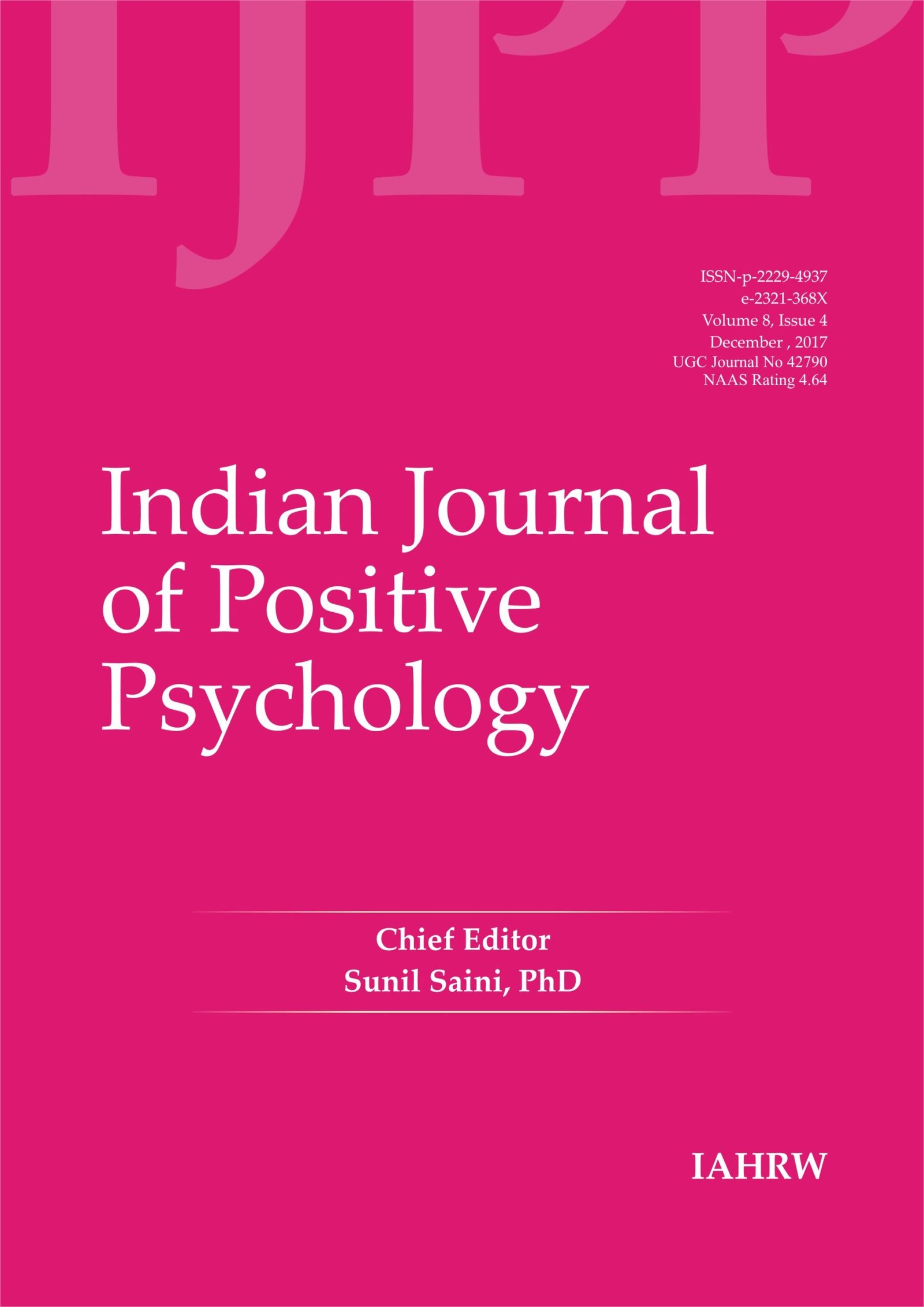
Indian Journal of Positive Psychology is a quarterly, peer-reviewed and refereed Journal Published by IAHRW. The journal aims to advance research in positive psychology, emphasizing wellbeing, resilience, happiness, optimism, personal growth, etc. It provides a platform for scholars, psychologists and professionals to explore the impact of positive emotions, strengths, mindfulness etc. on mental health and overall life satisfaction. The focus areas include happiness studies, emotional intelligence, coping strategies, psychological interventions and applied positive psychology in various settings like education, workplace and healthcare. The journal’s goals are to promote high-quality research, foster interdisciplinary collaborations, and contribute to the practical application of positive Psychology for individual and societal wellbeing. The IJPP is published regularly since 2010. For more details, write to us at iahrw2019@gmail.com
Editor-in-Chief: Sunil Saini, PhD
ORCHID ID: 0000-0002-5342-3424
Editorial Office: 1245/4, Moh. Sainian, Hisar, Haryana, India
Email: iahrw2019@gmail.com
Phone: 9255442103
Publisher: IAHRW
ISSN: 2229-4937 (print version)
ISSN: 2321-368X (electronic version)
Frequency: Quarterly (March, June, September and December)
Indexing: EBSCOhost Connection Two, Academic Search Complete, The Belt and Road Initiative Reference Source, Cogito Indexing Text, Academic Search Ultimate, Academic Search Main Edition, Biomedical Index, Google Scholar Crawl Database, SocINDEX with Full Text, Sociology Source Ultimate, ProQuest (Health and Medical Research Collection, Health Research Premier Collection, ProQuest Central Essentials, ProQuest Central Premium, ProQuest Central Student, ProQuest One Academy, ProQuest One Community College ), Index Copernicus International, Cross Ref (USA), J-Gate, USA Library, WorldCat, J-Gate, and Academic Search Premi
CHIEF EDITOR
Sunil Saini, PhD
ORCHID ID: 0000-0002-5342-3424
Indian Association of Health Research and Welfare, 1245/18, Moh. Sainian, Hisar, Haryana, India
INTERNATIONAL EDITORIAL BOARD
Micheal Furlong, PhD, University of California, Santa Barbra, USA
Mary Judd, PhD, Positive Psychology Coach, USA
Mahesh Gupta, PhD, Licenced Psychologist, USA
Grant J.Rich, PhD, Fellow, American Psychological Association, USA
Tayfun Doğan, PhD, The University of Kansas, Lawrence, Kansas, USA
Edward Hoffman, PhD, Yeshiva University, New York, USA
EDITORS
Dr. Alpana Vaidya, PhD
Department of Psychology, Symbiosis College of Arts & Commerce, Pune
ORCID iD: 0009-0002-0343-4926
Dr. Sangeeta Trama, PhD
Department of Psychology, Punjabi University, Patiala
ORCID iD: 0009-0003-9257-8722
Dr. Anand Prakash, PhD, University of Delhi, Delhi
Dr. Anita Sharma, PhD, HP University, Shimla, HP
Dr. Kiran Kumar, PhD, University of Mysore, Mysore
Dr. Manju Aggarwal, PhD, Amity University, Lucknow, Uttar Pradesh
Dr. Navdeep Singh Tung, PhD, GNDU, Amritsar, Punjab
Dr. Annalakshmi Narayanan, Bharthiyar University, Coimbatore
1. Dr. Updesh Kumar, PhD, Retired DIPR, DRDO, Delhi
2. Dr. Waheeda Khan, PhD, SGT University, Gurgaon, Haryana
3. Dr. Annalakshmi Narayanan, PhD, Bharthiyar University, Coimbatore
4. Dr. Manju Aggarwal, PhD, Amity University, Lucknow, Uttar Pradesh
Editorial Office: IAHRW, 1245/18, Moh. Sainian, Hisar, Haryana, India
Email: indianjournalpp@gmail.com,
Phone: 9255442103
Publisher: IAHRW
ISSN: 2229-4937 (print version)
ISSN: 2321-368X (electronic version)
Frequency: Quarterly
Indexing: EBSCOhost Connection Two, Academic Search Complete, The Belt and Road Initiative Reference Source, Cogito Indexing Text, Academic Search Ultimate, Academic Search Main Edition, Biomedical Index, Google Scholar Crawl Database, SocINDEX with Full Text, Sociology Source Ultimate, ProQuest (Health and Medical Research Collection, Health Research Premier Collection, ProQuest Central Essentials, ProQuest Central Premium, ProQuest Central Student, ProQuest One Academy, ProQuest One Community College ), Index Copernicus International, Cross Ref (USA), J-Gate, USA Library, WorldCat, J-Gate, and Academic Search Premi
Indian Journal of Positive Psychology (IJPP) is a peer-reviewed research journal published quarterly by the Indian Association of Health, Research and Welfare (IAHRW). The IJPP is indexed in EBSCO, ProQuest, Index Copernicus International, Cross Ref (USA), J-Gate, ProQuest Central, USA Library, WorldCat, J-Gate, Academic Search Premier, National Academy of Agricultural Sciences (NAAS), SafetyLit (A Service of WHO). The journal welcomes the submission of manuscripts that meet the general criteria of scientific excellence in the area of Positive Psychology from researchers across the world. IJPP is published Quarterly (March, June, September and December).
Manuscripts should be submitted in the format outlined in the Publication Manual of the American Psychological Association (7th edition) and should be sent via email at indianjournalpp@gmail.com. The papers are reviewed by professional reviewers who have specialized expertise in the respective area, and to judge the quality of the paper in a time bound and confidential manner. The paper shall be review by double blind review process.
Permission
Authors wishing to include figures, tables, or text passages that have already been published elsewhere are required to obtain permission from the copyright owner(s) for both the print and online format and to include evidence that such permission has been granted when submitting their papers. Any material received without such evidence will be assumed to originate from the authors.
Online Submission
Please follow the hyperlink “Submit online” on the right and upload all of your manuscript files following the instructions given on the screen.
The title page should include:
• The name(s) of the author(s)
• A concise and informative title
• The affiliation(s) and address(es) of the author(s)
• The e-mail address, and telephone number(s) of the corresponding author
Abstract
Please provide an abstract of 150 to 250 words. The abstract should not contain any undefined abbreviations or unspecified references.
Keywords
Please provide 4 to 6 keywords which can be used for indexing purposes.
Main Text
Manuscripts should be submitted in Word.
Tables
Tables should be as per APA format
References
References should be as per APA format as follows
• Journal article
Panda, T., Lamba, V., Goyal, N., Saini, S., Boora, S., Cruz. (2018). Psychometric Testing in Schools. Indian Journal of Health and Wellbeing, 8(2), 213–245.
• Article by DOI
Slifka, M. K., & Whitton, J. L. (2000) Clinical implications of dysregulated cytokine production. Journal of Molecular Medicine, doi:10.1007/s001090000086
• Book
Calfee, R. C., & Valencia, R. R. (1991). APA guide to preparing manuscripts for journal publication. Washington, DC: American Psychological Association.
• Book chapter
O’Neil, J. M., & Egan, J. (1992). Men’s and women’s gender role journeys: Metaphor for healing, transition, and transformation. In B. R. Wainrib (Ed.), Gender issues across the life cycle (pp. 107–123). New York: Springer.
• Online document
Abou-Allaban, Y., Dell, M. L., Greenberg, W., Lomax, J., Peteet, J., Torres, M., & Cowell, V. (2006). Religious/spiritual commitments and psychiatric practice. Resource document. American Psychiatric Association.
http://www.psych.org/edu/other_res/lib_archives/archives/200604.pdf. Accessed 25 June 2007.
Copyright form
Authors will be asked to transfer copyright of the article to the Publisher (or grant the Publisher exclusive publication and dissemination rights). This will ensure the widest possible protection and dissemination of information under copyright laws.
Proofreading
The purpose of the proof is to check for typesetting or conversion errors and the completeness and accuracy of the text, tables and figures. Substantial changes in content, e.g., new results, corrected values, title and authorship, are not allowed without the approval of the Editor. After online publication, further changes can only be made in the form of an Erratum, which will be hyperlinked to the article.
Ethical Guidelines for the author
• Authors should adhere to publication requirements that submitted work is original and has not been published elsewhere in any language. Work should not be submitted concurrently to more than one publication unless the editors have agreed to co-publication. If articles are co-published this fact should be made clear to readers.
• Copyright material (e.g. tables, figures or extensive quotations) should be reproduced only with appropriate permission and acknowledgement.
• Relevant previous work and publications, both by other researchers and the authors’ own, should be properly acknowledged and referenced.
• Data, text, figures or ideas originated by other researchers should be properly acknowledged and should not be presented as if they were the authors’ own
• All sources of research funding, including direct and indirect financial support, supply of equipment or materials, and other support (such as specialist statistical or writing assistance) should be disclosed.
• Authors should disclose the role of the research funder(s) or sponsor (if any) in the research design, execution, analysis, interpretation and reporting
• The research literature serves as a record not only of what has been discovered but also of who made the discovery. The authorship of research publications should therefore accurately reflect individuals’ contributions to the work and its reporting.
• In cases where major contributors are listed as authors while those who made less substantial, or purely technical, contributions to the research or to the publication are listed in an acknowledgement section, the criteria for authorship and acknowledgement should be agreed at the start of the project.
• Researchers should ensure that only those individuals who meet authorship criteria (i.e. made a substantial contribution to the work) are rewarded with authorship and that deserving authors are not omitted. Institutions and journal editors should encourage practices that prevent guest, gift, and ghost authorship.
• All authors should agree to be listed and should approve the submitted and accepted versions of the publication. Any change to the author list should be approved by all authors including any who have been removed from the list. The corresponding author should act as a point of contact between the editor and the other authors and should keep co-authors informed and involve them in major decisions about the publication (e.g. responding to reviewers’ comments).
• Authors should work with the editor or publisher to correct their work promptly if errors or omissions are discovered after publication.
• Authors should abide by relevant conventions, requirements, and regulations to make materials, reagents, software or datasets available to other researchers who request them. Researchers, institutions, and funders should have clear policies for handling such requests. Authors must also follow relevant journal standards. While proper acknowledgement is expected, researchers should not demand authorship as a condition for sharing materials.
• Authors should follow publishers’ requirements that work is not submitted to more than one publication for consideration at the same time.
• Authors should inform the editor if they withdraw their work from review, or choose not to respond to reviewer comments after receiving a conditional acceptance.
• Authors should respond to reviewers’ comments in a professional and timely manner.
• Appropriate approval, licensing or registration should be obtained before the research begins and details should be provided in the report (e.g. Institutional Review Board, Research Ethics Committee approval, national licensing authorities for the use of animals).
• If requested by editors, authors should supply evidence that reported research received the appropriate approval and was carried out ethically (e.g. copies of approvals, licences, participant consent forms).
• Researchers should not generally publish or share identifiable individual data collected in the course of research without specific consent from the individual (or their representative). Researchers should remember that many scholarly journals are now freely available on the internet, and should therefore be mindful of the risk of causing danger or upset to unintended readers (e.g. research participants or their families who recognise themselves from case studies, descriptions, images or pedigrees).
• The appropriate statistical analyses should be determined at the start of the study and a data analysis plan for the prespecified outcomes should be prepared and followed.
• Researchers should publish all meaningful research results that might contribute to understanding. In particular, there is an ethical responsibility to publish the findings of all clinical trials. The publication of unsuccessful studies or experiments that reject a hypothesis may help prevent others from wasting time and resources on similar projects. If findings from small studies and those that fail to reach statistically significant results can be combined to produce more useful information (e.g. by meta-analysis) then such findings should be published.
• Authors should supply research protocols to journal editors if requested (e.g. for clinical trials) so that reviewers and editors can compare the research report to the protocol to check that it was carried out as planned and that no relevant details have been omitted. Researchers should follow relevant requirements for clinical trial registration and should include the trial registration number in all publications arising from the trial.
• IAHRW and editors of Indian Journal of Positive Psychology assume no responsibility for statements and opinions advanced by the authors of its articles.
. In cases of alleged or proven scientific misconduct, fraudulent publication or plagiarism, the publisher, in close collaboration with the editors, will take all appropriate measures to clarify the situation reasonable steps to identify and prevent the publication of papers where research misconduct has occurred, and under no circumstances encourage such misconduct or knowingly allow such misconduct to take place.
Plagiarism
The acceptance rate depends on the below 10% plagiarism (Turnitin Software) and reviewers’ feedback and recommendations.
AI-Generated Content Policy
The Indian Journal of Health and Wellbeing follows ethical publishing standards and may have specific policies regarding the use of AI in research and writing. Authors are expected to disclose the use of AI tools in manuscript preparation, ensuring that AI-generated content does not compromise originality, accuracy, or ethical integrity. For precise guidelines, it is recommended to refer to the journal’s official policy. The AI content by Turnitin should be below 15%
Retraction, Correction, and Expression of Concern Policy
The Indian Journal of Health and Wellbeing (IJHW) is committed to maintaining the integrity of the scholarly record. The journal follows the principles and recommendations of the Committee on Publication Ethics (COPE) in handling corrections, expressions of concern, and retractions.
Corrections (Erratum/Corrigendum)
A correction may be issued when a published article contains significant errors that affect the accuracy, indexing, interpretation, or reputation of the publication but do not invalidate the study’s findings. Corrections may be initiated by authors, editors, or readers.
• An Erratum is issued when the error originates from the journal or publisher.
• A Corrigendum is issued when the error originates from the author(s).
• All corrections will be linked electronically to the original article and clearly identify the changes made.
Expression of Concern
The Editor-in-Chief may publish an Expression of Concern when substantial doubts arise regarding the integrity, reliability, ethical compliance, or authorship of a published article, and an investigation is ongoing. The notice will remain associated with the article until a final decision is reached.
Retraction Policy
Articles may be retracted if:
• There is clear evidence that findings are unreliable due to misconduct or honest error.
• The work constitutes plagiarism, duplicate publication, or redundant publication.
• Data fabrication, falsification, image manipulation, or unethical research practices are identified.
• Serious violations of publication ethics are confirmed.
Retraction Procedure
Appeals
Authors may appeal editorial decisions regarding corrections, expressions of concern, or retractions by submitting a written explanation and supporting documentation to the Editor-in-Chief. Appeals will be reviewed independently, and the final decision of the Editorial Board shall be binding. The journal reserves the right to update published content when necessary to protect the integrity of the scientific record and the interests of readers, researchers, and the public.
Editor-in-Chief: Sunil Saini, PhD, Editorial Office: 1245/18, Moh. Sainian, Hisar, Haryana, India
Email: indianjournalpp@gmail.com,
Phone: 9255442103
Publisher: IAHRW Publications Private Limited
ISSN: 2229-4937 (print version)
ISSN: 2321-368X (electronic version)
Frequency: Quarterly (March, June, September and December)
Indexing: EBSCO, ProQuest, Index Copernicus International, Cross Ref (USA), J-Gate, ProQuest Central, USA Library, WorldCat, J-Gate, Academic Search Premier, National Academy of Agricultural Sciences (NAAS), Publons, SafetyLit (A Service of WHO)
Peer Review
All content of the Indian Journal of Positive Psychology is subject to peer-review. The Editor first checks and evaluates the submitted manuscript, examining its fit and quality regarding its significance, manuscript format, and research quality. If it is suitable for potential publication, the Editor directs the manuscript for a Plagiarism check, and the minimum similarity acceptable is below 20% without references. After that, the editor directs the manuscript to two reviewers, both being experts in the field. This journal employs a double-blind review, where the author and referee remain anonymous throughout the process. Referees are asked to evaluate whether the manuscript is original, makes a theoretical contribution to the study, the methodology is sound, follows appropriate ethical guidelines, and whether the results are clearly presented and sufficient supporting studies are given and support the conclusion. The time for evaluation is approximately one month. The Editor’s decision will be sent to the author with recommendations made by the referees. Revised manuscripts might be returned to the initial referees who may then request another revision of the manuscript. After both reviewers’ feedback, the Editor decides if the manuscript will be rejected, accepted with revision needed, or accepted for publication. The Editor’s decision is final. Referees advise the Editor, who is responsible for the final decision to accept or reject the article.
Complaint Policy
We aim to respond to and resolve all complaints quickly. All complaints will be acknowledged within a week. For all matters related to the policies, procedures, editorial content, and actions of the editorial staff, the decision of the Editor-in-Chief shall be final. The procedure to make a complaint is easy. It can be made by writing an email to the editor: iahrw2019@gmail.com
Conflict of Interest Policy
Transparency and objectivity in research are essential for publication in this journal. These principles are strictly followed in our peer review process and decision of a publication. Manuscript submissions are assigned to reviewers in an effort to minimize potential conflicts of interest. After papers are assigned, individual reviewers are required to inform the editor-in-chief of any conflict.
1. Initial Manuscript Evaluation
All submitted manuscripts undergo an initial editorial screening to assess their relevance to the journal’s scope, originality, scientific quality, ethical compliance, adherence to submission guidelines, and overall suitability for peer review.
2. Number of Referees Assigned
Manuscripts that successfully pass the initial evaluation are typically sent to two independent expert reviewers for double-blind peer review. In cases of conflicting recommendations, a third reviewer may be invited.
3. Delivery of Peer Review Feedback
Reviewer comments and recommendations are communicated to the corresponding author through the journal’s editorial system or email. Anonymous reviewer reports are provided along with editorial guidance for revision, where applicable.
4. Typical Length of Peer Review
The peer review process generally takes 4–8 weeks, depending on reviewer availability, the complexity of the manuscript, and the timeliness of responses.
5. Handling of Revise and Resubmit Requests
Authors receiving a revision decision are requested to submit a revised manuscript along with a detailed point-by-point response to reviewers’ comments within the specified timeframe. Revised submissions may be returned to the original reviewers for further evaluation when necessary.
6. Editorial Decisions
Based on reviewers’ recommendations and editorial assessment, one of the following decisions may be communicated to the author:
The final decision is made by the Editor-in-Chief or the Editorial Board and is communicated to the corresponding author through email along with the relevant comments and recommendations.
Pages:55-58 Everybody presume to live a happy life and wants to work in a healthy environment. When we think about workplace a number of negative thoughts comes in mind. Workplace is generally considered to be a place of stress, burden, conflict, challenges, struggle, and politics and so on. Can we imagine of a work place free from tensions and mental pressures? Now, the scenario has been changing rapidly and possibilities of such an environment are high with the magical effect of Positive Psychology. Present paper has attempted to answer these questions. It has also tried to find out the positive strengths, which can be utilized in increasing positivity at workplace. A positive perspective and approach is largely recognized as making valuable contributions for today's organizations. This study has further emphasized on positive psychological capacities of employees, which they have on their performance. Pages:55-58Sunil Kumar and Vinod Shanwal (Department of Psychology, Gautam Buddha University, Noida, India) |
Pages:59-62 Mindfulness facilitates “wise mind” states, in which the individual is able to find a synthesis between emotional experience and logical thought (Feigenbaum, 2006). It primarily aims to teach people to approach the stressful situations “mindfully” so that they may respond to the situation wisely instead of reacting to it automatically. It is a core psychological process that can alter how we respond to the unavoidable difficulties in the life not only to everyday existential challenges , but also to severe psychological problems such as suicidal ideation (Linehan 1993a), chronic depression (Segal, Williams, & Teasdale, 2002) and psychotic delusions (Bach & Hayes, 2002). As a focused psychological strategy or skill, Mindfulness is gaining clinical credence for many psychological disorders (Baer, 2003). Mindfulness Based Stress Reduction has demonstrated positive effects for a number of physical and mental health problems including cancer, chronic pain, fibromyalgia, depression, anxiety and disordered eating (Baer, 2003; Grossman et al., 2004). The present paper provides an understanding of the concept as well as throws light on the research into the neurological and behavioral benefits of mindfulness skill training. Pages:59-62Taruna and Sandeep Singh (Department of Applied Psychology, Guru Jambheshwar University of Science & Technology… |
Pages:63-65 The study investigated premarital sex and healthy sexual relationship among students of University of Ado- Ekiti, Nigeria. The sample consisted of 360 male and female students. Multistage and simple random sampling was used to select the sample from six faculties in the university. The data collected were analyzed using frequency counts, percentage scores and t-test inferential statistics. Three general questions were raised and two hypotheses were tested at 0.05 level of significance. The instrument for the study was titled: Premarital sex and healthy sexual relationship among students (PSAHSRAS). It had a reliability coefficient of 0.68 and its validity was found to be 0.71. The study revealed that students had premarital sex and that majority of them used contraceptives. It was thus recommended that those who use condom should be encouraged to continue so as to free themselves from life long problems. Pages:63-65Osakinle, E.O. (University of Ado-Ekiti,Ekiti State, Nigeria) |
Pages:66-69 This article is a part of an on-going national action research survey of behavior based safety (BBS) in India including 1750 executives and 713 workers in 57 multi-national organizations based on an in- depth group interviews and a structured questionnaire using open-ended questions. This paper includes a number of original case studies and field observations selected during BBS training interventions in a period of twelve years between 1997 and 2009 across Indian organizations (such as petroleum, steel, cement, power, chemical etc.) which shall be highly useful in application of the concept and process of BBS for human resource / safety professionals and everyone who is concerned about correcting unsafe behaviors for reduction of accidents and promoting safe behaviors for developing injury-free culture in their organizations. Pages:66-69H L Kaila (Department of Psychology S.N.D.T. Womens University, Mumbai) |
Pages:70-76 This comparative study examines the cognitive style, subjective well being spirituality and Emotional Intelligence among Institutionalised and Non-institutionalised elderly, and assesses whether there is any difference between Institutionalised and non-institutionalised widows with respect to the above mentioned variables. It also assesses whether there is any difference between Institutionalised and Non-Institutionalised widowers with respect to the aforesaid variables. Data were taken for Institutionalised elderly from 26 widows and 8 widowers, data were taken for Non-Institutions elderly from 30 widows and 9 widowers. Cognitive style test, Subjective Well-being Inventory (SUBI), Cognitive Behaviour Spirituality Scale (CBSS) and Wong and Low Emotional Intelligence Scale (WLEIS) were administered on these samples and comparison was drawn among these groups. Statistics in the form of Mean, Standard Deviation and unequal independent “t” test were conducted. Pages:70-76Abanti Bhattacharya and Tilottama Mukherjee (Department of Psychology, University of Calcutta, Kolkata) |
Pages:1-10 The population of the elderly is growing rapidly across the globe and is emerging as a serious area of concern for the government and policy makers. U.S. Census Bureau reported that India's older population is projected to quadruple by mid century, while that of the world is expected to triple. Due to increasing longevity and changing lifestyle factors, health of the elderly has become a matter of concern for every nation. The aim of the present study was to study the contribution of humor and emotion regulation towards health of the elderly. The sample comprised 150 elderly people & (75 males and 75 females) in the age range of 55-70 years who had retired from government service and were residing with their families. They were administered Humor Styles Questionnaire, Emotion Regulation Questionnaire, Mental Health Inventory-18 and General Health Rating Index. Inter-correlations were computed and general regression model was applied. The results revealed that humor solely or alongwith reappraisal contributed towards health of the elderly. Both, humor and reappraisal were significantly contributing towards mental health outcomes of the elderly males, whereas, in case of their physical health, affiliative and self-enhancing humor were found to do so. Affiliative humor was found to be a positive predictor of physical health of elderly females, whereas, in case of their mental health, none of these variables were found to be potential predictors. It was further found that health was positively related with affiliative and self-enhancing humor, though its links with aggressive and self-defeating humor were relatively missing. Reappraisal was found to be a significant determinant of health in elderly males, though it was significantly correlated with physical/mental health of both, males and females. Reappraisal was found to be linked with affiliative and self-enhancing humor particularly. The links of suppression with humor/health were, by and large, missing for both, elderly males as well as females. It was thought-provoking to find a positive relation between reappraisal and suppression. Pages:1-10Sangeeta Trama and Vandana Rana (Department of Psychology, Punjabi University, Patiala, Punjab) |
Pages:11-15 The present study was conducted in State of Kuwait and Republic of India as a cross cultural study in order to study relationship between depression and self esteem, optimism, and stress. The present study was administrated on adolescent secondary school students from Kuwait and India (150 males & 150 females). The results indicated that there are differences between genders for some variables irrespective of the country. Results showed a significant negative relationship between depression with self esteem, and optimism, but positive correlation with stress. Stepwise regression showed that self esteem, stress, and optimism as predictors of depression in Kuwait environment, however in India the results showed that only stress and self esteem are the predictors. Pages:11-15Gopa Bhardwaj (Department of Psychology, University of Delhi, Delhi, India)Majed M. Al-Ali (General Controller of… |
Pages:16-20 What does the present paper has to offer to the ongoing debate of whether we should have a separate, new positive psychology? The preliminary contribution is three-fold. First, an attempt is made to situate the claim of novelty in the context of endeavours of positive psychologists in providing a kind of history of psychology to justify and serve their own purposes. Second, declaration of positive psychology as representing a paradigm shift is re-examined following Kuhn's philosophical underpinnings. Finally, the questions related to pedagogy, and efforts to institutionalising positive psychology are posited. All of these lines have rarely been taken up in the debate about positive psychology, and when taken not for the concerns emphasised here. It is argued that only after embarking upon the issues raised in the paper, prerequisite to have a separate, new psychology for human strengths and virtues would adequately be evaluated. Pages:16-20Umesh L. Bharte (Jawaharlal Nehru University, New Delhi) |
Pages:21-23 Causal attributions play a predominant role in diverse behaviors. The present study attempts to find whether resilient distinguished himself / herself on causal attributions for events in terms of the underlying dimensions identified by Weiner (1979). A convenient sample consisting of 120 students studying in higher secondary class was used in this study. The age of the subjects in the sample ranged from 15 to 16 years. Both males and females were included in the sample. The Revised Causal Dimension Scale (CDS-II) (McAuley, Duncan, & Russell, 1992) and Resilience Scale for Adolescence (READ) (Hjemdal et al., 2006) were used to obtain measure of causal attributions and resilience of the Subjects. Criterion groups were formed representing high group and low group on resilience using the median score of the distribution of scores of the sample on READ. The groups were compared with each other on dimensions of causal attributions namely Locus of Causality (LOC), Stability(S), External Control (EC) and Personal Control (PC) using ANOVA. Findings show that locus of causality and personal control significantly differentiated low and high group on resilience. Highly resilient were higher on locus of causality and on personal control. The perceived the cause of events to be originating from within them and perceived higher degree of volitional influence that can be exerted over a cause by them was found to be characteristic of resilient. Pages:21-23Annalakshmi Naryanan (Bharathiar University, Coimbatore,Tamil Nadu) |
Pages:24-26 The paper examines Bhakti in light of the classical Indian depiction of emotions, viz. - the Rasa Theory. Bhakti is viewed as a movement in the emotional life of the aspirant, from minor devotional states (survival/pleasure/ego orientation), to major devotional states (love orientation). Drawing from Sri Aurobindo, a connection is then made between Bhakti and Psychic unfoldment. Devotional love provides the bedrock for a life lived in and from the Psychic. Further, years of observation, introspection, and reflection have lead me to conclude that one of the most essential pre-requisites for making an effective counselor/therapist is a groundedness in love, which ought to forever radiate from the being of the helping person. Traditionally in India, individuals turned to their gurus in times of crisis and suffering, and upon encountering the guru, the healing process began immediately because of the unconditional love and acceptance on the part of the guru, for the distressed individual. This paper thus focuses on the nature of (S)self work which takes one in the direction of becoming love (or more loving), and in this process better able to help others, and thereby also facilitate one's own evolution. Pages:24-26Suneet Verma (Department of Psychology, University of Delhi, Delhi) |
Pages:27-29 There is a considerable significant increase in behavioral disorders among people of various age groups. The prevalence of behavioral disorders is mainly due to socio-cultural changes, ignorance, love with this world, stress at the personal, social and organizational level, etc. Spiritual remedies have proven to be of tremendous benefit and value to the human beings at large. From the point of view of Islam, behavioral disorders are due to the deviations from the Islamic traditions. Husain (2006) has discussed anger, conceit, envy, gossiping and false suspicions, hypocrisy, and ignorance, love of worldly wealth, miserliness, ostentation, and pride and boastfulness and suggested the coping strategies for these evils and vices in the light of Islamic traditions. Pages:27-29Akbar Husain (Aligarh Muslim University, Aligarh, Uttar Pardesh) |
Pages:30-32 The study aims to explore the relationship between family environment and self esteem of delinquents and non delinquents. The sample comprised of 50 delinquents within the age range of 14 to 16 years. Data was gathered by using Self-esteem Inventory (Prasad & Thakur, 1977) and Family Environment Scale (Moos & Moos, 1986). For delinquents, findings indicated a negative and significant correlation between desirable aspect of self esteem and cohesion in family environment. For non delinquents, a positive and significant correlation between desirable aspect of self esteem and cohesion in family environment was observed. Non delinquents from highly cohesive family were higher on desirable aspect of self esteem and reverse was true for delinquents. Results revealed that not only delinquents and non delinquents differ significantly from each other on the two dimensions of self esteem (i.e., desirable and undesirable) with non delinquent reporting higher self esteem as compared to their delinquent counterparts. Cohesion in family environment played a differential role towards their self esteem. Pages:30-32Anup Sud and Gauri Sharma (Department of Psychology, H.P. University, Shimla (H.P.), India) |
Pages:33-35 Positive psychology is a way of thinking positive in life. Three types of prevention are defined in the literature: primary, secondary and tertiary. Primary prevention methods works as a proactive approach which seeks to eliminate problems before they develop, secondary prevention methods stands for the early identification of problems and intervention before problems become more severe, and tertiary most often refers to treatment and rehabilitation after the full occurrence of the disorder. Daily exercising and lively social support consistently reduces psychological distress, such as depression and anxiety, during times of stress, and it promotes psychological adjustment to chronically stressful conditions, including coronary artery disease, diabetes, HIV infection, and cancer. The present paper reviews how positive psychology can be effective in primary, secondary and tertiary prevention of lifestyle diseases. Pages:33-35Rakesh Kumar Behmani (Guru Jambheshwar University of Science & Technology, Hisar (Haryana)) |
Pages:36-39 Positive psychology is the scientific study of positive experiences and positive individual traits, and the institutions that facilitate their development. It is the scientific study of positive experiences and positive individual traits, and the institutions that facilitate their development. Positive psychology has many distinguished ancestors and modern cousins. Since at least the time of Socrates, Plato, and Aristotle, the “good life” has been the subject of philosophical and religious inquiry. Pages:36-39Ashima Soni (Department of Psychology, Panjab University, Chandigarh) |
Pages:40-43 Adults and young adults underwent the phase of transition from dependency to independence with different attitudes towards life satisfaction, optimism and psychological distress in general. The present study was conducted with two objectives. First was to examine the relationship of life satisfaction, optimism, and psychological distress, second was to investigate the sex differences among all these variables. The sample of the study involved 200 post graduate students (100 males and 100 females) between the age ranges from 22 to 28 years. The subjects were assessed with Life Satisfaction Scale (Alam & Shrivastava), General Health Questionnaire (Goldberg) and Optimism Scale (Seligman). The data were analyzed by using Pearson's Product Moment method of correlation, t-test. The results revealed that (i) one of the measures of optimism (PMB) was found positively associated with psychological distress. (i) Male and female subjects differ significantly on psychological distress and on optimism (Permanent Bad). Pages:40-43Teenu Nandal (Govt. College, Maham (Haryana))Hardeep Lal Joshi (Kurukshetra University Kurukshetra (Haryana)) |
Pages:44-46 The yogic practices not only serve as prevention and cure of physical disorders but also result in mental peace and higher psychic and spiritual attainments. In the yogic psychophysiology of the pranic system, the body, mind and spirit work in an integrated manner. Expansion of consciousness takes place through the awakening of the charkas. The outcomes of Yoga and meditation in various studies have shown beneficial effects in desirable psychosocial outcomes, clinical outcomes, neuropsychological and health care utilization. Pages:44-46Monika Sharma and S C Manchanda (Sir Ganga Ram Hospital, New Delhi) |
Pages:47-49 The stereotype of women being more 'emotional' sex survives to this day. The present study was conducted to empirically validate this affirmation. Two hundred thirty eight engineering graduates (males=110, females=128)in the age range of 21-25 years formed the sample of the study. The gender differences on various dimensions of Emotional Intelligence were explored with the help of a self-report measure of Emotional Intelligence that included (a) self -awareness (b) empathy (c) self-motivation (d) emotional stability (e) managing relations (f) integrity (g) self-development (h) value orientation (i) commitment and (j) altruistic behavior. The data was analyzed using independent sample't' test. Results of the study indicate a significantly higher score of female students on selfawareness, self-motivation, managing relations, integrity and overall emotional intelligence in comparison to the male students. The difference on other dimensions of Emotional Intelligence was statistically insignificant. Pages:47-49Mamta Chaturvedi (Scientist-E (DRDO), Selection Centre Central, Bhopal) |
Pages:50-54 Positive psychology, a new branch of psychology which focuses on the empirical study of such things as positive emotions, strengths-based character, and healthy institutions. Positive psychology has three central concerns: positive emotions, positive individual traits, and positive institutions. Understanding positive emotions entails the study of contentment with the past, happiness in the present, and hope for the future. Understanding positive individual traits consists of the study of the strengths and virtues, such as the capacity for love and work, courage, compassion, resilience, creativity, curiosity, integrity, self-knowledge, moderation, self-control, and wisdom. Understanding positive institutions entails the study of the strengths that foster better communities, such as justice, responsibility, civility, parenting, nurturance, work ethic, leadership, teamwork, purpose, and tolerance. Emotional intelligence (EI) represents an ability to validly reason with emotions and to use emotions to enhance thought. It includes the abilities to accurately perceive emotions, to access and generate emotions so as to assist thought, to understand emotions and emotional knowledge, and to reflectively regulate emotions so as to promote emotional and intellectual growth. When it comes to leadership, EI is incredibly important, making the difference between effective and mediocre leadership. This paper throws light to the concept of emotional intelligence as a positive psychology tool for effective leadership. Pages:50-54Shiney Chib (Datta Meghe Institute of Management Studies, Nagpur, Maharashtra) |
Pages:55-58 Everybody presume to live a happy life and wants to work in a healthy environment. When we think about workplace a number of negative thoughts comes in mind. Workplace is generally considered to be a place of stress, burden, conflict, challenges, struggle, and politics and so on. Can we imagine of a work place free from tensions and mental pressures? Now, the scenario has been changing rapidly and possibilities of such an environment are high with the magical effect of Positive Psychology. Present paper has attempted to answer these questions. It has also tried to find out the positive strengths, which can be utilized in increasing positivity at workplace. A positive perspective and approach is largely recognized as making valuable contributions for today's organizations. This study has further emphasized on positive psychological capacities of employees, which they have on their performance. Pages:55-58Sunil Kumar and Vinod Shanwal (Department of Psychology, Gautam Buddha University, Noida, India) |
Pages:59-62 Mindfulness facilitates “wise mind” states, in which the individual is able to find a synthesis between emotional experience and logical thought (Feigenbaum, 2006). It primarily aims to teach people to approach the stressful situations “mindfully” so that they may respond to the situation wisely instead of reacting to it automatically. It is a core psychological process that can alter how we respond to the unavoidable difficulties in the life not only to everyday existential challenges , but also to severe psychological problems such as suicidal ideation (Linehan 1993a), chronic depression (Segal, Williams, & Teasdale, 2002) and psychotic delusions (Bach & Hayes, 2002). As a focused psychological strategy or skill, Mindfulness is gaining clinical credence for many psychological disorders (Baer, 2003). Mindfulness Based Stress Reduction has demonstrated positive effects for a number of physical and mental health problems including cancer, chronic pain, fibromyalgia, depression, anxiety and disordered eating (Baer, 2003; Grossman et al., 2004). The present paper provides an understanding of the concept as well as throws light on the research into the neurological and behavioral benefits of mindfulness skill training. Pages:59-62Taruna and Sandeep Singh (Department of Applied Psychology, Guru Jambheshwar University of Science & Technology… |