Mob : +91 92554 42103
Email id: iahrw2019@gmail.com
Mob : +91 92554 42103
Mob : +91 92554 42103
Email id: iahrw2019@gmail.com
Mob : +91 92554 42103

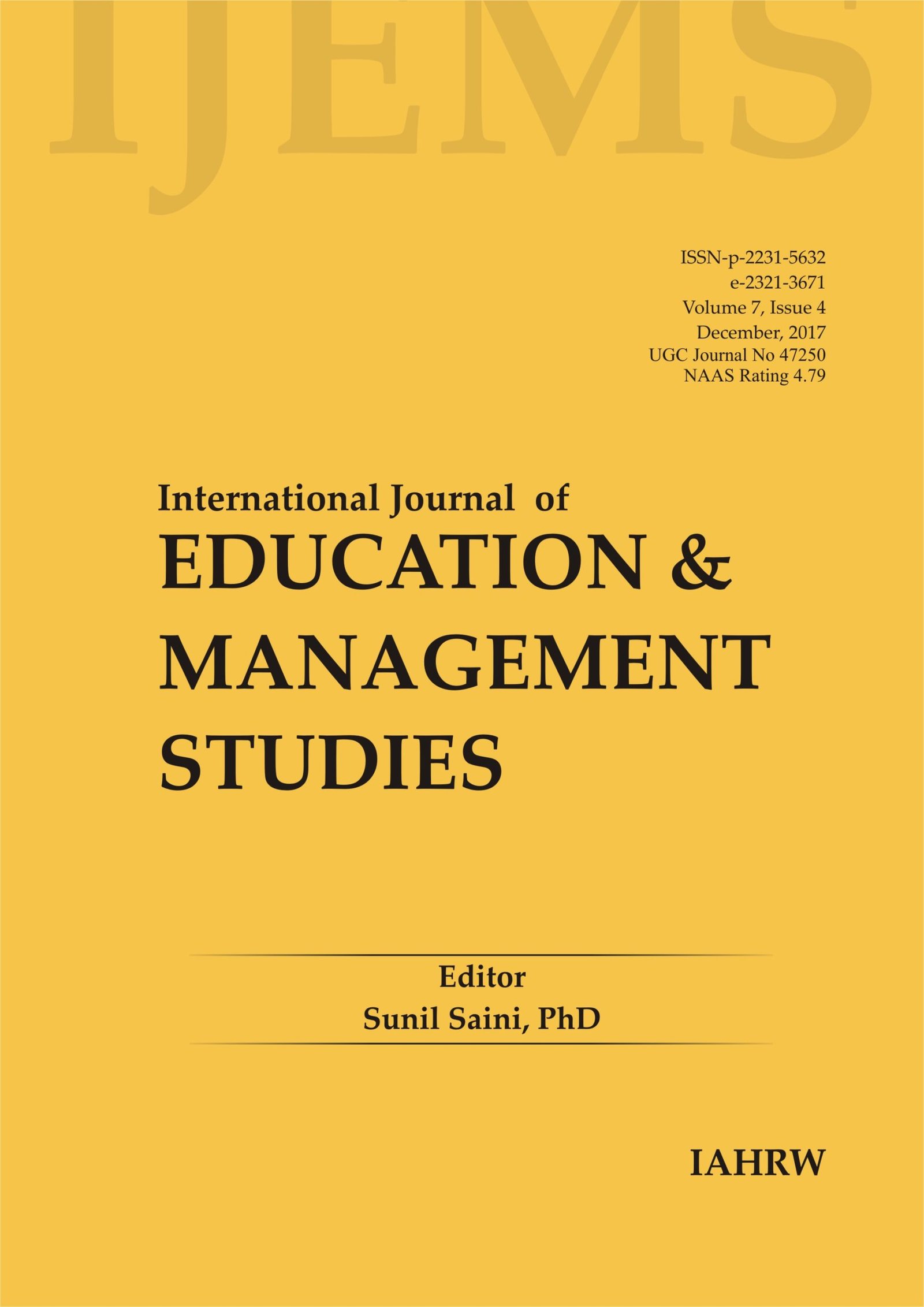
International Journal of Education and Management Studies (IJEMS) is an indexed, peer-reviewed and refereed journal published quarterly by the Indian Association of Health, Research, and Welfare (IAHRW). International Journal of Education and Management Studies likely aims to promote research and knowledge dissemination in the fields of education and management. Its objectives include fostering academic discussions on innovative teaching methodologies, educational policies, leadership strategies, human resource management, and organizational behavior. The journal focuses on areas such as pedagogy, curriculum development, educational psychology, business management, entrepreneurship, and corporate governance. Its goals are to publish high-quality, peer-reviewed research, encourage interdisciplinary collaboration, and contribute to the practical application of education and management theories for academic and professional growth. The journal is indexed with ProQuest, ProQuest Central, J-Gate, and National Academy of Agricultural Sciences (NAAS) Rating 4.58. IJEMS is being published regularly since 2011. For more details write to us to iahrw2019@gmail.com
Editor-in-Chief: Sunil Saini, PhD, Editorial Office: 1245/18, Moh. Sainian, Hisar, Haryana, India
Email: iahrw2019@gmail.com
Phone: 9255442103, 7988885490
Publisher: IAHRW Publications
ISSN: 2231-5632 (print version)
ISSN: 2321-3671 (electronic version)
Frequency: Quarterly (March, June, September and December)
Indexing: ProQuest, ( ProQuest Central Premium, ProQuest One Academy, ProQuest One Community College ), Index Copernicus International, J-Gate, Questia Library, Technion Israel Institute of Technology Library, National Academy of Agricultural Sciences (NAAS) Rating 4.58
CHIEF EDITOR
Sunil Saini, PhD
ORCHID ID: 0000-0002-5342-3424
Indian Association of Health, Research and Welfare, Hisar, Haryana, India
EDITORS
David Bennett, PhD, Charisma University, USA S. C. Kundu, PhD, Guru Jambheshwar University of Science and Technology, Hisar
B.K. Punia, PhD, Guru Jambheshwar University of Science and Technology, Hisar
Mahesh Thakur, PhD, Karve Institute of Social Sciences, Pune
Jaspreet Kaur, PhD, Punjabi University, Patiala
Vandana Punia, PhD, GJUS&T, Hisar, Haryana
Munish Nagpal, PhD, Deputy Commissioner, Govt of Haryana
Sangeeta Trama, PhD, Punjabi University Patiala
Sandeep Singh, PhD, GJUS&T, Hisar, Haryana
Email: iahrw2019@gmail.com
Phone: 9255442103
Publisher: IAHRW
ISSN: 2231-5632 (print version)
ISSN: 2321-3671 (electronic version)
Frequency: Quarterly
Indexing: ProQuest, ProQuest Central, Index Copernicus International, J-Gate, Questia Library, Technion Israel Institute of Technology Library
Author’s guidelines:
International Journal of Education and Management Studies (IJEMS) is a peer-reviewed research journal published quarterly by Indian Association of Health, Research and Welfare. The IJEMS is indexed with ProQuest, J-Gate, etc. The journal welcomes the submission of manuscripts that meet the general criteria of scientific excellence in the area of Education, Psychology and Management Studies and other related fields. IJEMS is published Quarterly (March, June, September and December).
Manuscripts should be submitted in the format outlined in the Publication Manual of the American Psychological Association (6th edition) and should be sent via email at iahrw2010@gmail.com. The papers are reviewed by professional reviewers who have specialized expertise in the respective area, and to judge the quality of the paper in a time bound and confidential manner. The paper shall be review by double blind review process.
Permission
Authors wishing to include figures, tables, or text passages that have already been published elsewhere are required to obtain permission from the copyright owner(s) for both the print and online format and to include evidence that such permission has been granted when submitting their papers. Any material received without such evidence will be assumed to originate from the authors.
Online Submission
Please follow the hyperlink “Submit online” on the right and upload all of your manuscript files following the instructions given on the screen.
The title page should include:
• The name(s) of the author(s)
• A concise and informative title
• The affiliation(s) and address(es) of the author(s)
• The e-mail address, and telephone number(s) of the corresponding author
Abstract
Please provide an abstract of 150 to 250 words. The abstract should not contain any undefined abbreviations or unspecified references.
Keywords
Please provide 4 to 6 keywords which can be used for indexing purposes.
Main Text
Manuscripts should be submitted in Word.
Tables
Tables should be as per APA format
References
References should be as per APA format as follows
• Journal article
Panda, T., Lamba, V., Goyal, N., Saini, S., Boora, S., Cruz. (2018). Psychometric Testing in Schools. Indian Journal of Health and Wellbeing, 8(2), 213–245.
• Article by DOI
Slifka, M. K., & Whitton, J. L. (2000) Clinical implications of dysregulated cytokine production. Journal of Molecular Medicine, doi:10.1007/s001090000086
• Book
Calfee, R. C., & Valencia, R. R. (1991). APA guide to preparing manuscripts for journal publication. Washington, DC: American Psychological Association.
• Book chapter
O’Neil, J. M., & Egan, J. (1992). Men’s and women’s gender role journeys: Metaphor for healing, transition, and transformation. In B. R. Wainrib (Ed.), Gender issues across the life cycle (pp. 107–123). New York: Springer.
• Online document
Abou-Allaban, Y., Dell, M. L., Greenberg, W., Lomax, J., Peteet, J., Torres, M., & Cowell, V. (2006). Religious/spiritual commitments and psychiatric practice. Resource document. American Psychiatric Association.
https://web.archive.org/web/20100308014645/http://www.psych.org:80/edu/other_res/lib_archives/archives/200604.pdf. Accessed 25 June 2007.
Copyright form
Authors will be asked to transfer copyright of the article to the Publisher (or grant the Publisher exclusive publication and dissemination rights). This will ensure the widest possible protection and dissemination of information under copyright laws.
Proof reading
The purpose of the proof is to check for typesetting or conversion errors and the completeness and accuracy of the text, tables and figures. Substantial changes in content, e.g., new results, corrected values, title and authorship, are not allowed without the approval of the Editor. After online publication, further changes can only be made in the form of an Erratum, which will be hyperlinked to the article.
Ethical Guidelines for the author
• Authors should adhere to publication requirements that submitted work is original and has not been published elsewhere in any language. Work should not be submitted concurrently to more than one publication unless the editors have agreed to co-publication. If articles are co-published this fact should be made clear to readers.
• Copyright material (e.g. tables, figures or extensive quotations) should be reproduced only with appropriate permission and acknowledgement.
• Relevant previous work and publications, both by other researchers and the authors’ own, should be properly acknowledged and referenced.
• Data, text, figures or ideas originated by other researchers should be properly acknowledged and should not be presented as if they were the authors’ own
• All sources of research funding, including direct and indirect financial support, supply of equipment or materials, and other support (such as specialist statistical or writing assistance) should be disclosed.
• Authors should disclose the role of the research funder(s) or sponsor (if any) in the research design, execution, analysis, interpretation and reporting
• The research literature serves as a record not only of what has been discovered but also of who made the discovery. The authorship of research publications should therefore accurately reflect individuals’ contributions to the work and its reporting.
• In cases where major contributors are listed as authors while those who made less substantial, or purely technical, contributions to the research or to the publication are listed in an acknowledgement section, the criteria for authorship and acknowledgement should be agreed at the start of the project.
• Researchers should ensure that only those individuals who meet authorship criteria (i.e. made a substantial contribution to the work) are rewarded with authorship and that deserving authors are not omitted. Institutions and journal editors should encourage practices that prevent guest, gift, and ghost authorship.
• All authors should agree to be listed and should approve the submitted and accepted versions of the publication. Any change to the author list should be approved by all authors including any who have been removed from the list. The corresponding author should act as a point of contact between the editor and the other authors and should keep co-authors informed and involve them in major decisions about the publication (e.g. responding to reviewers’ comments).
• Authors should work with the editor or publisher to correct their work promptly if errors or omissions are discovered after publication.
• Authors should abide by relevant conventions, requirements, and regulations to make materials, reagents, software or datasets available to other researchers who request them. Researchers, institutions, and funders should have clear policies for handling such requests. Authors must also follow relevant journal standards. While proper acknowledgement is expected, researchers should not demand authorship as a condition for sharing materials.
• Authors should follow publishers’ requirements that work is not submitted to more than one publication for consideration at the same time.
• Authors should inform the editor if they withdraw their work from review, or choose not to respond to reviewer comments after receiving a conditional acceptance.
• Authors should respond to reviewers’ comments in a professional and timely manner.
• Appropriate approval, licensing or registration should be obtained before the research begins and details should be provided in the report (e.g. Institutional Review Board, Research Ethics Committee approval, national licensing authorities for the use of animals).
• If requested by editors, authors should supply evidence that reported research received the appropriate approval and was carried out ethically (e.g. copies of approvals, licences, participant consent forms).
• Researchers should not generally publish or share identifiable individual data collected in the course of research without specific consent from the individual (or their representative). Researchers should remember that many scholarly journals are now freely available on the internet, and should therefore be mindful of the risk of causing danger or upset to unintended readers (e.g. research participants or their families who recognise themselves from case studies, descriptions, images or pedigrees).
• The appropriate statistical analyses should be determined at the start of the study and a data analysis plan for the prespecified outcomes should be prepared and followed.
• Researchers should publish all meaningful research results that might contribute to understanding. In particular, there is an ethical responsibility to publish the findings of all clinical trials. The publication of unsuccessful studies or experiments that reject a hypothesis may help prevent others from wasting time and resources on similar projects. If findings from small studies and those that fail to reach statistically significant results can be combined to produce more useful information (e.g. by meta-analysis) then such findings should be published.
• Authors should supply research protocols to journal editors if requested (e.g. for clinical trials) so that reviewers and editors can compare the research report to the protocol to check that it was carried out as planned and that no relevant details have been omitted. Researchers should follow relevant requirements for clinical trial registration and should include the trial registration number in all publications arising from the trial.
Plagiarism
The acceptance rate depends on the below 10% plagiarism (Turnitin Software) and reviewers’ feedback and recommendations.
AI-Generated Content Policy
The Indian Journal of Health and Wellbeing follows ethical publishing standards and may have specific policies regarding the use of AI in research and writing. Authors are expected to disclose the use of AI tools in manuscript preparation, ensuring that AI-generated content does not compromise originality, accuracy, or ethical integrity. For precise guidelines, it is recommended to refer to the journal’s official policy. The AI content by Turnitin should be below 15%
Retraction, Correction, and Expression of Concern Policy
The Indian Journal of Health and Wellbeing (IJHW) is committed to maintaining the integrity of the scholarly record. The journal follows the principles and recommendations of the Committee on Publication Ethics (COPE) in handling corrections, expressions of concern, and retractions.
Corrections (Erratum/Corrigendum)
A correction may be issued when a published article contains significant errors that affect the accuracy, indexing, interpretation, or reputation of the publication but do not invalidate the study’s findings. Corrections may be initiated by authors, editors, or readers.
• An Erratum is issued when the error originates from the journal or publisher.
• A Corrigendum is issued when the error originates from the author(s).
• All corrections will be linked electronically to the original article and clearly identify the changes made.
Expression of Concern
The Editor-in-Chief may publish an Expression of Concern when substantial doubts arise regarding the integrity, reliability, ethical compliance, or authorship of a published article, and an investigation is ongoing. The notice will remain associated with the article until a final decision is reached.
Retraction Policy
Articles may be retracted if:
• There is clear evidence that findings are unreliable due to misconduct or honest error.
• The work constitutes plagiarism, duplicate publication, or redundant publication.
• Data fabrication, falsification, image manipulation, or unethical research practices are identified.
• Serious violations of publication ethics are confirmed.
Retraction Procedure
Appeals
Authors may appeal editorial decisions regarding corrections, expressions of concern, or retractions by submitting a written explanation and supporting documentation to the Editor-in-Chief. Appeals will be reviewed independently, and the final decision of the Editorial Board shall be binding. The journal reserves the right to update published content when necessary to protect the integrity of the scientific record and the interests of readers, researchers, and the public.
Editor-in-Chief: Sunil Saini, PhD, Editorial Office: 1245/18, Moh. Sainian, Hisar, Haryana, India
Email: iahrw2019@gmail.com,
Phone: 9255442103
Publisher: IAHRW
ISSN: 2231-5632 (print version)
ISSN: 2321-3671 (electronic version)
Frequency: Quarterly
Indexing: ProQuest, ProQuest Central, J-Gate, Questia Library, Technion Israel Institute of Technology Library
Peer Review
All content of the International Journal of Education and Management Studies is subject to peer-review. The Editor first checks and evaluates the submitted manuscript, examining its fit and quality regarding its significance, manuscript format, research quality. If it is suitable for potential pubication, the Editor directs the manuscript for Plagiarism check, and the minimum similarity acceptable is below 20% without references. After that, editor directs the manuscript to two reviewers, with both being experts in the field. This journal employs double-blind review, wehre the author and referee remains anonymous througout the process. Referees are asked to avaluate whetehr the manuscript is original, makes a theoretical contribution to the study, methodoogy is sound, follos appropriate ethical guidelines, whether the results are clearly presented and sufficient supporting studies are given and support the conclusion. The time for evaluation is approximately one month. The Editor’s decision will be sent to the author with recommendations made by the referees. Revised manuscripts might be returned to the initial referees who may then request another revision of the manuscript. After both reviewer’s feedback, the Editor decides if the manuscript will be rejected, accepted with revision needed or accepted for publication. The Editor’s decision is final. Regerees advise the Editor, who is responsible for the final decision to accept or reject the article.
Compaint policy
We ain to respond to and resolve all complaints quickly. All complaints will be acknowledged within a week. For all matters related to the policies, procedures, editorial content, and actions of the editorial staff, the decision of the Editor-in-Chief shall be final. The procedure to make a complaint is easy. It can be made by writing an email to editor: iahrw@iahrw.org
Confict of Interest Policy
Transparency and objectiity in research are essential for publication in this journal. These principles are strictily followed in our peer review process and decision of publication. Manuscript submissions are assigned to reviewers in an effort to minimize potential conflicts of interest. After papers are assigned, individual reviewers are required to inform the editor-in-chief of any conflict.
1. Initial Manuscript Evaluation
All submitted manuscripts undergo an initial editorial screening to assess their relevance to the journal’s scope, originality, scientific quality, ethical compliance, adherence to submission guidelines, and overall suitability for peer review.
2. Number of Referees Assigned
Manuscripts that successfully pass the initial evaluation are typically sent to two independent expert reviewers for double-blind peer review. In cases of conflicting recommendations, a third reviewer may be invited.
3. Delivery of Peer Review Feedback
Reviewer comments and recommendations are communicated to the corresponding author through the journal’s editorial system or email. Anonymous reviewer reports are provided along with editorial guidance for revision, where applicable.
4. Typical Length of Peer Review
The peer review process generally takes 4–8 weeks, depending on reviewer availability, the complexity of the manuscript, and the timeliness of responses.
5. Handling of Revise and Resubmit Requests
Authors receiving a revision decision are requested to submit a revised manuscript along with a detailed point-by-point response to reviewers’ comments within the specified timeframe. Revised submissions may be returned to the original reviewers for further evaluation when necessary.
6. Editorial Decisions
Based on reviewers’ recommendations and editorial assessment, one of the following decisions may be communicated to the author:
The final decision is made by the Editor-in-Chief or the Editorial Board and is communicated to the corresponding author through email along with the relevant comments and recommendations.
Page: 227-231 The purpose of present study is to examine the effect of underemployment on individual, organisation, family and the whole community. Underemployment is an acute form of labor underutilization which negatively affects the whole economy. As compared to unemployment, it has received far less attention than it deserves. But with the outset of the COVID-19, it has become the major concern for most of the countries across the globe. The aim of this paper is to provide a comprehensive review of underemployment and its implications. The findings reveal that both visible and invisible kinds of underemployment, not only impact the psychological well-being of individuals but they also affect their relationship with family, organisation and the whole society. Page: 227-231Manjeet Kaur and Pratibha Goyal (School of Business Studies, Punjab Agricultural University, Ludhiana, Punjab) |
Page: 232-236 Researches in the area of human development greatly emphasize the direct or indirect role that parents have on their child's development. This study examined how the socio-economic status especially income of the family and education of both father and mother relates to parents' academic pressure. Furthermore, the study also tries to assess gender specific relationships between adolescent's perception of parental pressure and ego virtue of fidelity. A sample of 512 (258 male & 254 female) adolescents completed the questionnaires that measuring perceived parental pressure (separately for father & mother) and ego virtue of fidelity. The result suggests that for both male and female adolescents, perceived academic pressure from father was a significant negative predictor of ego virtue of fidelity. The findings further revealed that male students reported greater pressure to perform academically compared to female students. However, females reported higher levels of ego virtue of fidelity compared to male adolescent students. Page: 232-236Sunbul Afaq and Roomana N. Siddiqui (Department of Psychology, Aligarh Muslim University, Uttar Pradesh) |
Page: 237-240 High work engagement is associated with the benefits of organization as well as their health and well-being. So, it has become considerably important for the employers as well as also for the organizational/industrial psychologist to emphasize on employee engagement and mental health. The purpose of this study was to look at the influence of employee engagement in the mental health of hospitality sector workers. A correlational design was used in current study to examine the role of employee engagement in mental health of employees of Hospitality sectors. The present study was conducted on 100 Hotel employees (Managerial & non-managerial) of both the gender with the age range of 20 to 60 years. Employee engagement was measured by employee engagement scale by Schaufeli and Bakker (2004) and Psychological Distress Manifestation Scale (PDMS) by Masse, Poulin, Dassa, Lambert, Belair, and Battaglini (1998) was used to assess metal health of employees at work place in present study.The correlational analysis show a significant negative correlation between dimension of employee engagement, e.g., Vigor, Dedication and Absorption and PDMS dimensions (e.g., irritability, anxiety/ depression, social disengagement & self-depreciation). At workplace disengaged workers may experience poor mental health. Findings of the study indicate that low level of employee engagement lead to, mental health complaints at workplace. Page: 237-240Arjun Sharma and Shalini Singh (Department of Psychology, Maharshi Dayanand University, Rohtak, Haryana) |
Page: 241-243 This research paper is a sociological analysis of the prevailing form of folk arts. The focus is at the reasons why the different tribes and castes have given up their ancestral occupations of performing arts. The analysis is being done to understand the different folk arts found in culture of Punjab, the communities who performed these arts, their reasons, importance and relevance. These communities include the art of Baazi (acrobatic feats) of the Baazigars, the spectacles of the Madaris, art of Bengalas, dance of Nats and the imitations of Bhand or Marasis. The major focus is to understand the importance of folk arts through present day phenomena. The proliferation of new recreational activities through new media forced folk art based communities to change their occupations. Page: 241-243Pushpinder Singh (Department of Sociology, Mata Gujri College, Fatehgarh Sahib, Punjab) |
Page: 244-249 The unsatisfactory attempts at qualitatively synthesizing research literature heralded the coming of new strategies for integration-strategies that make the integration of the findings of empirical research itself an empirical task. What is involved then is an “analysis of analysis” or to use the term coined by Glass (1976) “meta-analysis.” Meta-analysis is the statistical summary of the results of all the studies on a particular topic. Studies relevant to a conceptual issue are collected and summary statistics from each study (such as means, correlation, etc.) are reduced to a common metric. This becomes the unit of analysis, and is analysed in quantitative tests. This research paper attempts to take a practical journey into meta-analysis. Page: 244-249Salma Seth (Department of Applied Psychology, Vivekananda College, University of Delhi, Delhi) |
Page: 250-256 People often put off a task because they do not want to do it and eventually they fritter away hours on trivial pursuits while delaying the tasks or assignments they are supposed to perform. This tendency of voluntarily delaying an intended course of action has been considered as a consequence of self-regulation failure and having deleterious outcomes for well-being and performance in different periods of life. Procrastination in academic realm holds many negative outcomes for students like higher stress, lower grades and poor health which further influence their academic and social functioning. The objective of current research was to evaluate the effectiveness of biofeedback training in reducing academic procrastination. It was hypothesized that post intervention scores on procrastination, fear of failure and task aversiveness would be significantly lower as compared with pre intervention scores of experimental group. A pre- post experimental control group design was used. PASS scale was used to identify academic procrastinators who were higher on fear of failure and task aversiveness. Further, participants who were frequent procrastinators and willing to lessen their propensity to delay were randomly assigned to experimental (n=75) and control (n=75) groups. Participants of experimental group were given biofeedback training comprised of eight sessions thrice a week in individual sessions. No training was given to control group participants. At the completion of training sessions, participants of both groups were again assessed on PASS scale. The results showed that biofeedback training was effective in reducing procrastination (F= 133.62), fear of failure (F= 243.89) and task aversiveness (F= 76.75) in participants of experimental group. On the other hand, control group participants did not show any statistical significant change pertaining to procrastination and its contributing factors. Page: 250-256Sukhminder Kaur, Simarjeet Kaur, and Ramanpreet Kaur (Department of Psychology, Punjabi University, Patiala, Punjab) |
Page: 257-261 The present study focused on Psychological Well-being as Flourishing in relationship with Goal Orientation among post- graduate students, studying in various non-professional courses in various colleges of Pune city. In the subject- matter of positive psychology, Flourishing has emerged as the advanced level of psychological well-being. As a motivational construct, Goal orientation reflects significant individual differences. Learning Goal Orientation driven individuals focus on exploring innate competencies and so continue exploring opportunities that nourish learning; while Performance Goal Orientation driven individuals are more output-oriented. They are more behind favourable gains and have a tendency to avoid challenges. The sample consisted of 205 students. Overall significant correlations were found between dimensions of flourishing and focused two goal orientations; except between flourishing dimension of engagement and performance goal orientation. Regression analysis revealed learning goal orientation positively predicts psychological well-being as flourishing in significant way among students. Page: 257-261Dinesh Naik1 and Aparna A. Satpute2 (Department of Psychology, NVPM’s Arts, Commerce & Science… |
Page: 262-269 Examining the influence of emotional intelligence on organizational citizenship behavior. Standard questionnaire was used to gather required data from 205 participant academic staffs selected using stratified random sampling technique. One sample t-test, independent t-test, correlation and linear regression were used as analysis techniques. The level of academic staffs' emotional intelligence and organizational citizenship behavior was found as significantly above average. Significant positive relationship was found between emotional intelligence and organizational citizenship behavior. The regression analysis indicated that emotional intelligence significantly predicts organizational citizenship behavior. There was significance difference on emotional intelligence and organizational citizenship behavior between male and female academic staffs. Academic staffs at BDU have the ability to know and control their emotion, motivate themselves, have empathy for the feelings of others and insight into how others feel and manage others emotions. Page: 262-269Awgchew Shimelash Yasegnal (Department of Psychology, College of Education and Behavioral Sciences, Bahir Dar… |
Page: 270-272 Lockdown due to Covid-19 pandemic situation had started in India since 24th March 20201 and after that almost two years is going to be passed but it is very difficult to access digital education by the students of India properly though 'Digital India'1 was launched by Prime Minister of India on 1st July 2015.2 Actually Indian education system is not habituated with online education rather world knows Indian education for Ashram education/Tapoban education (Tagorian model of education) 3 and Gurukula education(ancient Indian education system where shisha living near to guru)4 where environment and students are connected with each other. Lockdown has braked this spiritual connection. Lockdown has insisted the students, teachers, and education system of India access education through digital mode where the morality, ethics, values, creativity, quality, practical knowledge, and field-based project work are affected adversely to some extent. Every corner of India may get the education through digital mode but whether the internet is present in every corner of India, whether all the Indian students have the capacity to buy the android phone and laptop, whether the uninterrupted internet high speed (5G or 10 gigabits per second) 5 is available everywhere, whether the teachers of India are habituated in the online education system, whether the Indian students and teachers access online teaching-learning education ethically, whether the controller of examinations to educational institutions is experienced in conducting digital examinations. So, there is a huge number of confusions are present in our contemporary education system to run digital education completely. Again, based on the last two years' teaching and evaluation system during a lockdown of the examination, it is experienced that almost all the students give the answers of the questions during online examination based on the pen-book method and they put the questions in google and take the answers from that. Even there are some students who do not write the answer scripts in their own handwriting rather they engage 2nd party to write it. In some cases, teachers do not check answer scripts properly and give marks just based on the roll numbers or names. In some cases, it is again observed that teacher has mistakenly provided the marks though the candidate has sent the answer-scripts in the relevant emails provided by the institution/department. Later when students saw the mark sheet without the marks on a particular paper, he/they fill up the scrutiny form with proper institutional fees, after that they pass the same paper with relevant marks. Now the question is why students will bear extra scrutiny charges due to the fault of the teacher's careless job during the checking of the answer scripts? Sometimes students join the online examination link to present their assignments but just after starting the presentation candidate leave the link and show the excuse for internet problem. Actually, the candidate has not done the assignment properly, and to hide this truth he/she does this type of malpractice. Thus, the blended learning or hybrid teaching method should be applied to the contemporary Indian education system. Moreover, the concept of 'Sustainable Thinking'6 must be incorporated in the development of moral education of the students and teachers. Page: 270-272Tapas Pal1 and Ajoy Sarkar2 (Geography and In-charge of Centre for Differently Abled Persons… |
Pages:114-117 Cheating involves unauthorized utilization of data, resources, products or techniques in performing academic works. Academic dishonesty is a critical issue and generally spread among students. Some pupils cheat since they are extremely centred on external results like good marks; others cheat since they are focused on with sustaining a specific picture to themselves or to their associates; however others cheat simply because they lack the emotional maturity to indulge in complicated responsibilities or due to the forms of attributions they've created. There are many psychological factors behind academic dishonesty. In present study the point of focus is emotional maturity in relation to academic dishonesty among adolescents. For this purpose, a total sample of 150 school students of class 11th and 12th was selected from different schools. Tools utilized were emotional maturity scale and academic cheating scale. Results indicate that there is a significant relationship between emotional maturity and academic dishonesty. The results and implications have been discussed at length in the paper. Pages:114-117Shilpa Kamboj and Sarvdeep Kohli (Department of Psychology, M. D. University, Rohtak, Haryana) |
Pages:118-123 The main target of this research article was to know whether body image perception predicts self-esteem of high school adolescent students. To realize this linear regression analysis was computed. Apart from this, the article tried to assess the status of adolescent's body image perception and self-esteem via one samples t-test. Finally, the study identified sex differences among adolescent male and female students regarding body image perception and self-esteem by employing independent samples t-test. Participants of the study were 94 (male= 47 & female= 47) selected through stratified simple random sampling technique. According to results of the study, adolescent students had higher level of body image perception and self- esteem. On the other hand, finding of the study indicated that body image perception predicted self-esteem of adolescent students. Regarding sex disparity on body image perception and self-esteem among male and female adolescent students, there was no significant distinction between the two sex groups. Pages:118-123Wossen Getahun Abera (Department of Psychology, MA in Social Psychology, Bahir Dar University, Ethiopia) |
Pages:124-128 The Sustainable Development Goal-4 (SDG-4) calls for providing inclusive and quality education to all by 2030. The present research paper is based on the major issues involved in providing and getting quality education in the conflict-torn border areas of Jammu Division in the Union Territory of J&K which have also been exacerbated by the ongoing COVID-19 pandemic. Since cross-border armed conflict has already been a huge challenge to the education system in the border areas, COVID-19 has exposed the system to such a level of non-functionality in those areas that the entire education system has come to the standstill. This can be attributed to a number of reasons including lack of digital connectivity, infrastructure, health issues arising due to the ongoing pandemic, lack of awareness among people, and cross-border disturbances. The study is an attempt to cover all these aspects and has also focused on how these issues have created a challenging situation both for the students and the government thereby posing serious negative impacts on the future of the students in particular and the attainment of SDG-4 in general. Pages:124-128Mohit Kumar Anand1, Mridula Bali2, and Pallavi Anand3 (Department of Sociology, University of Jammu, J&K1… |