
Posted on By admin
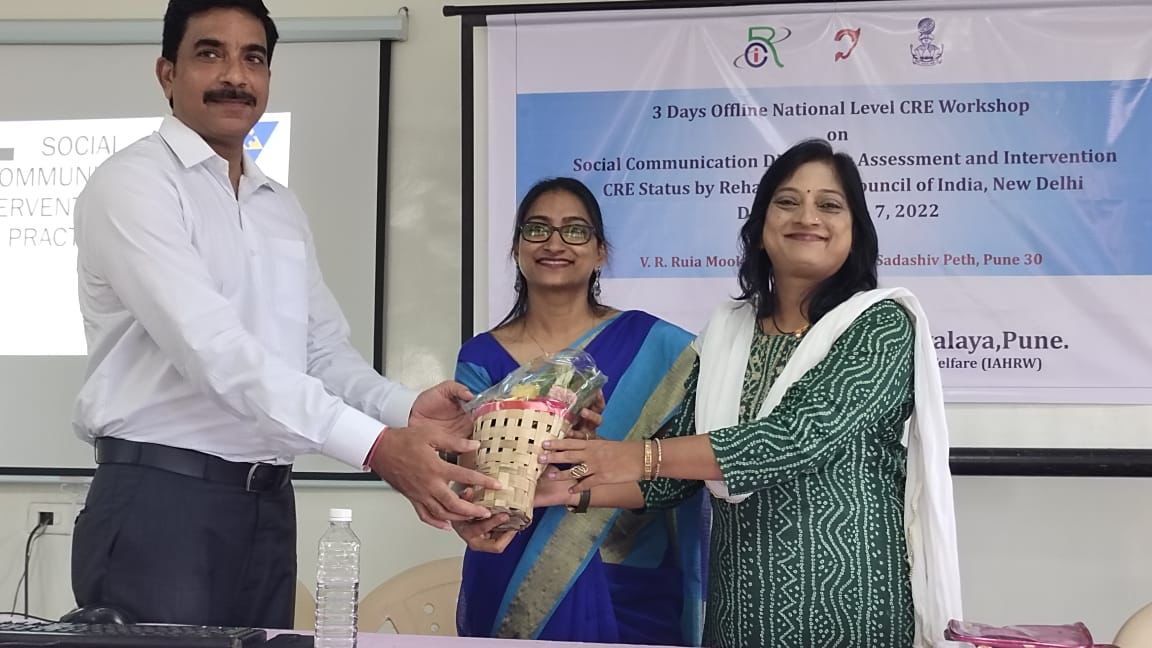
2024 Workshop
Social Stories and ASD Intervention
Social stories are you to describe specific social situations to individuals and circumstances while promoting self coming and self management. Social stories are very effective to provide direction corresponding to a social situation.They are not meant to change behaviour rather they are meant to clarify social expectations we can use images or words to present the situation.
Social stories were initially develop to explain social situations children with autism spectrum disorder and to help them learn socially appropriate behaviour and responses but now used to help other children with learning and intellectual disorders also.
It is important to keep in mind that’s so stories might be less effective for nonverbal children for children with poor comprehension skills Social stories are used along with other therapies.
Social stories can be used to:
- ·Understand how others behave or respond
- To cope with change in routine for unexpected events
- To understand the perspective of an autistic person
- to develop self care skills ,social skills and academic abilities
- to develop self esteem by providing positive feedback
- manage behaviour
Some social stories are written on single sheets of paper, others are written in booklets and some are recorded onto tape or video.
As we all know people with Autism spectrum disorder face challenges in responding to social behaviour and engage in social interactions you to lack of understanding of social cues or rules. social stories can teach you social skills and help them to regulate their behaviour short sentences of phrases.
Many different intervention methods and programs have been created and used throughout the world. Such methods include the Floortime approach, relationship development interventions, the Son-Rise picture exchange communication system program, the Lovaas program, the Miller Method, verbal behavior interventions, pivotal response training, play and play therapy, music therapy, sensory integration therapy, and social stories (Westwood, 2009).Most of these methods focus on cognitive training and communication with the environment, and none focus directly on social skills. For this reason, an alternative method to improve the social skills of children with ASD is needed.
One alternative method used to teach social skills to children with ASD is the social stories method, which was created by Gray (1995, 1998) to address the social difficulties of children with autism.
Specifically, they help children with ASD to manage their behaviors by providing exact descriptions of what is going on in a story, and of when, how, and why the events described occurred. Independent studies have shown that social story intervention was efficient in improving social behaviors (e.g., Crozier & Tincani, 2006; Kuoch & Mirenda, 2003; Wright & McCathern, 2012), responding to others (e.g., Delano & Snell, 2006), emotion recognition (e.g., Bader, 2006), appropriate game-playing with others (e.g., Andrews, 2004), and modifying maladaptive behaviors (e.g., Brownell, 2002; Rust & Smith, 2006).
Some examples daily routine on which forces stories can be created for autistic children are
- Moving to the Next Subject
- Coming Home from School
- Getting Ready for Bed